Before you even cross the threshold, the teahouse announces itself. It begins as a low, steady hum vibrating through the hallway, a beautiful collision of overlapping conversations and the rhythmic clatter of heavy porcelain.
When you finally step inside, the morning unfolds in a brilliant, chaotic choreography.
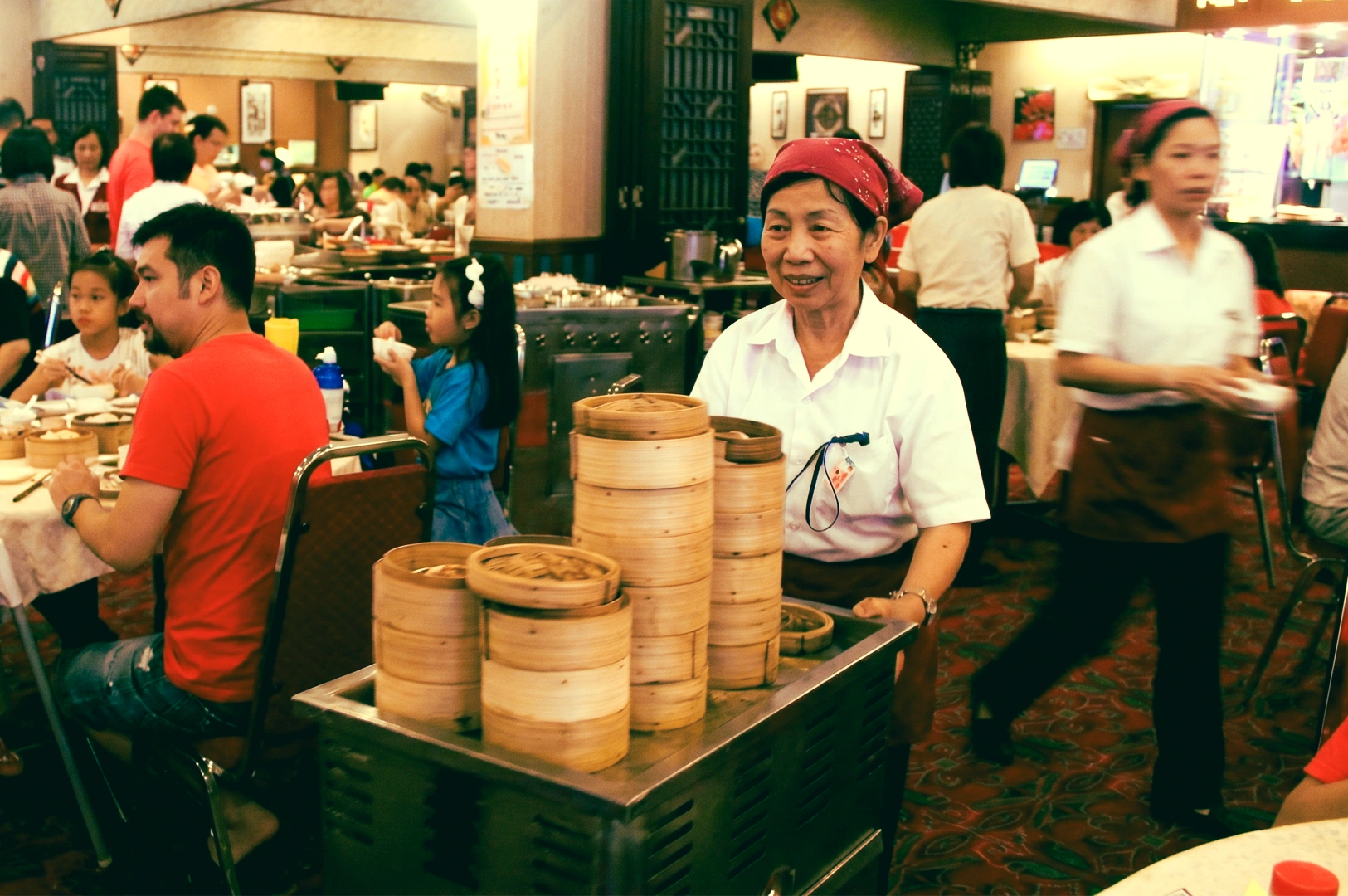
Silver pushcarts rattle over tiled floors, their metal wheels providing a steady bassline to the room’s melody. Servers weave through the narrow spaces between round tables, balancing precarious towers of woven bamboo.
Every time a lid lifts, a sudden bloom of steam escapes into the cool air. Breathe in, and you instantly catch the earthy fragrance of steeped lotus leaves. This is followed quickly by the rich, caramelized scent of roasted pork and the delicate, floral notes of pouring jasmine tea.
The air itself feels warm, dense with anticipation and the comforting smells of a kitchen running at full tilt.
We take our seats, and the symphony shifts to a more intimate scale. We hear the heavy, satisfying thud of the ceramic teapot coming to rest at the center of the table.
We catch the sharp, clean scrape of wooden chopsticks separating, and the gentle, percussive tap of two fingers against the glass turntable—a quiet thank you for a freshly filled cup.
Families lean in close, their voices rising and falling in waves as they negotiate who gets the last pan-fried radish cake.
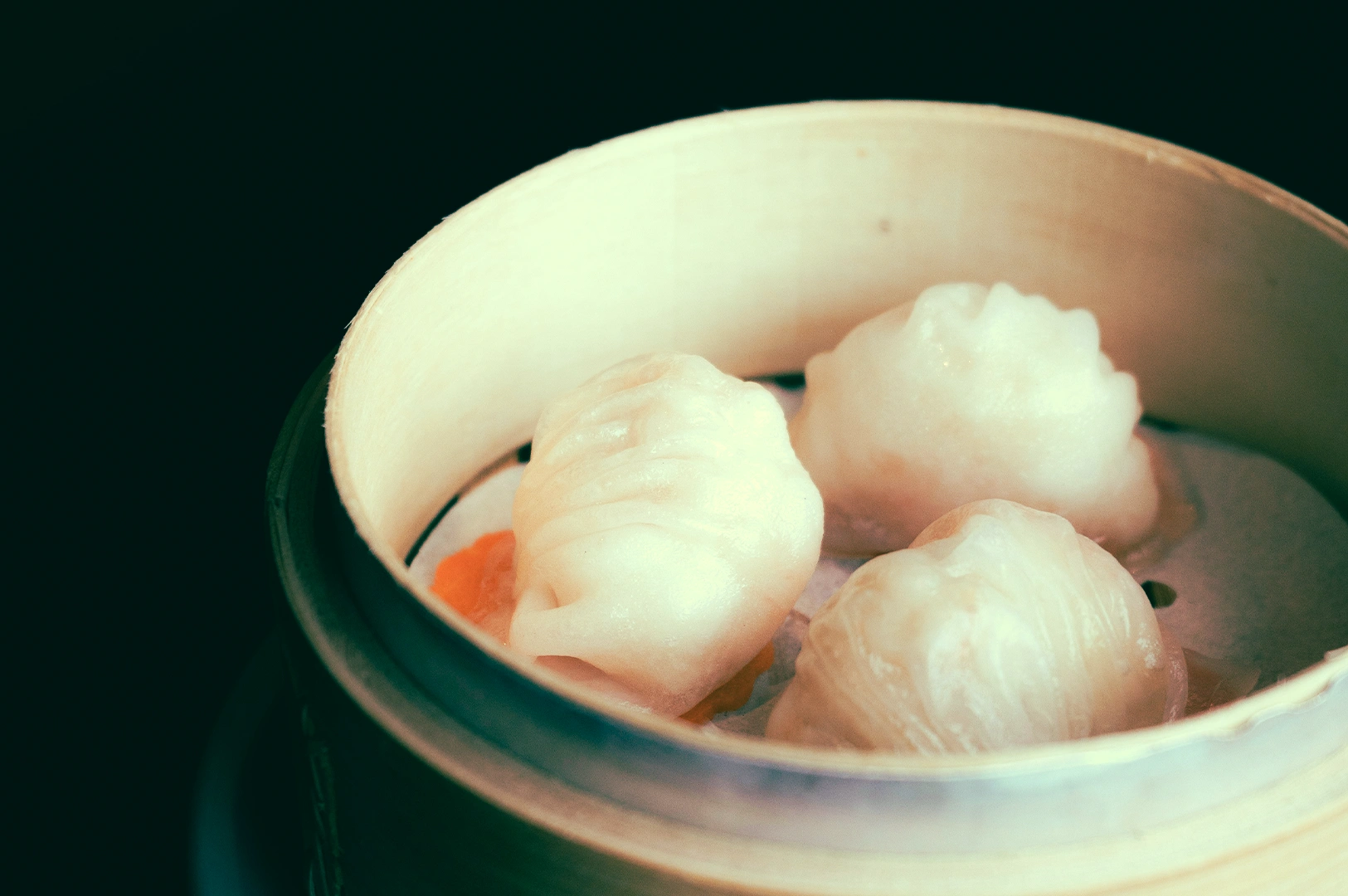
Nothing stands still. Lazy Susans spin slowly, trading a plate of golden, flaky egg tarts for a steaming basket of translucent shrimp dumplings. You feel the radiant heat of a fresh dumpling through the thin walls of your ceramic spoon.
You watch the dark tea leaves swirl and settle in the pot.
The teahouse asks us to sit and simply absorb the surrounding energy. This beautiful, noisy morning ritual is never just about filling our stomachs. It is a full, immersive awakening of the senses, wrapping us in the warmth of shared space, familiar sounds, and the simple, enduring joy of eating together.