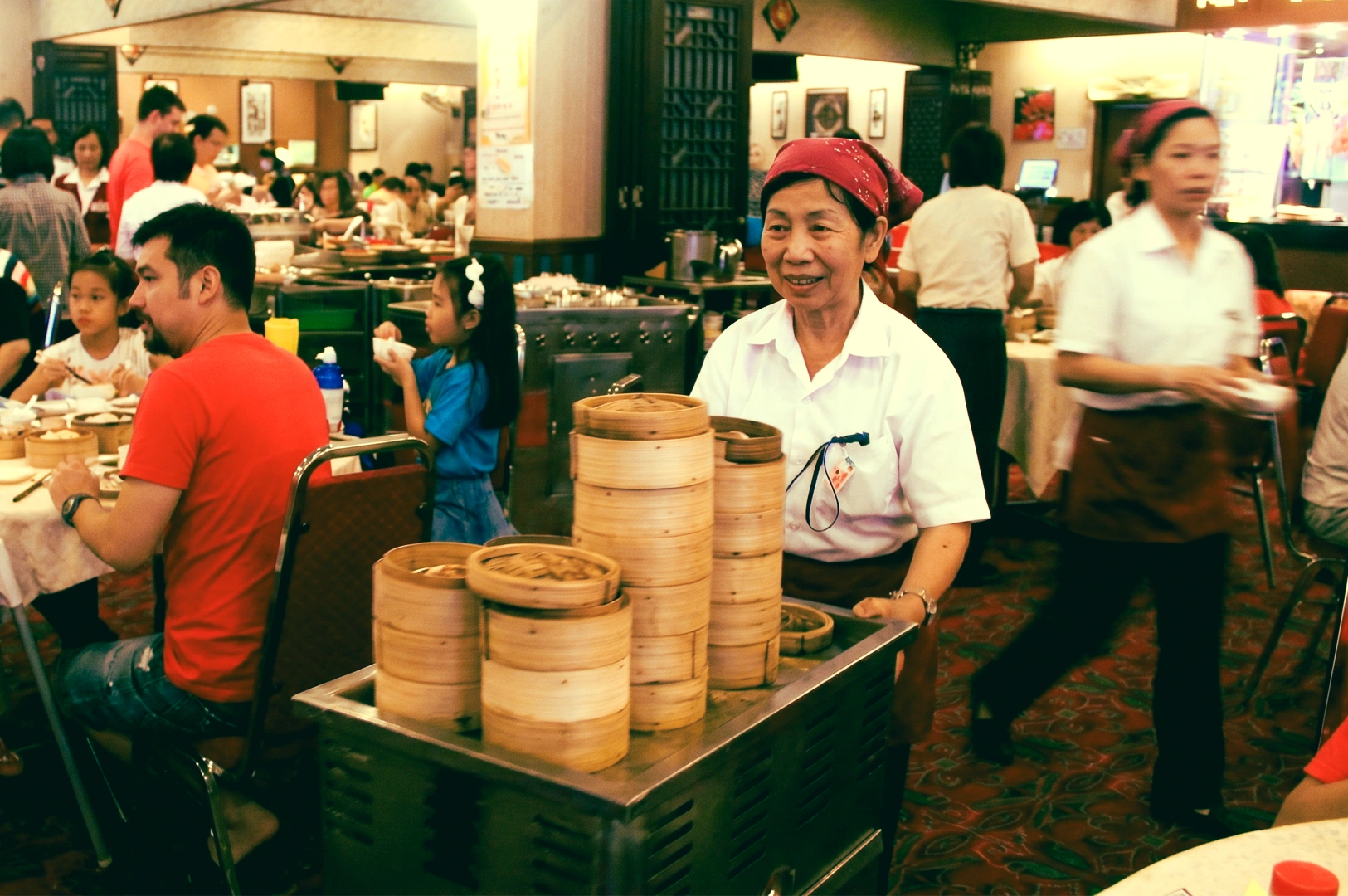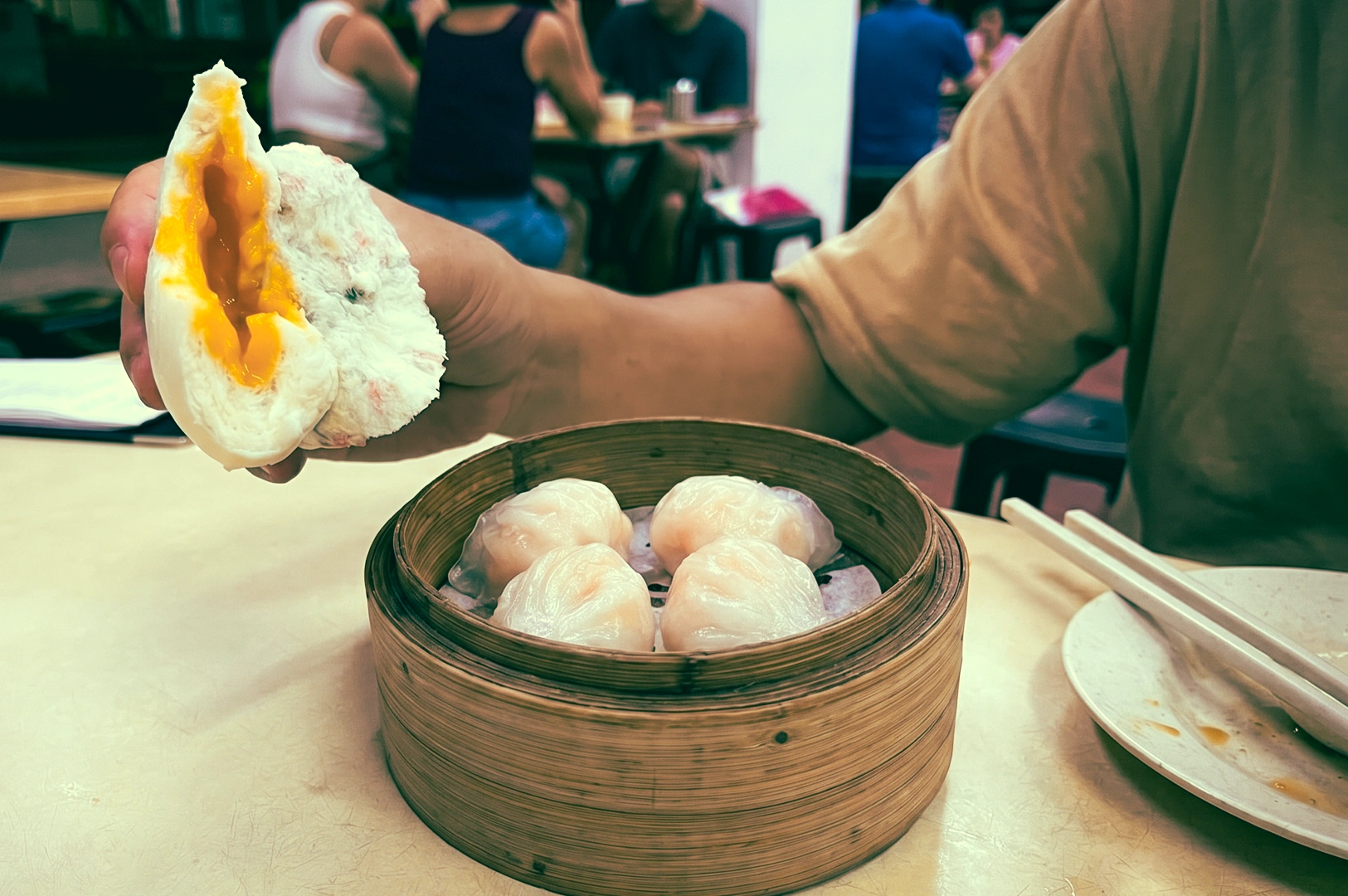
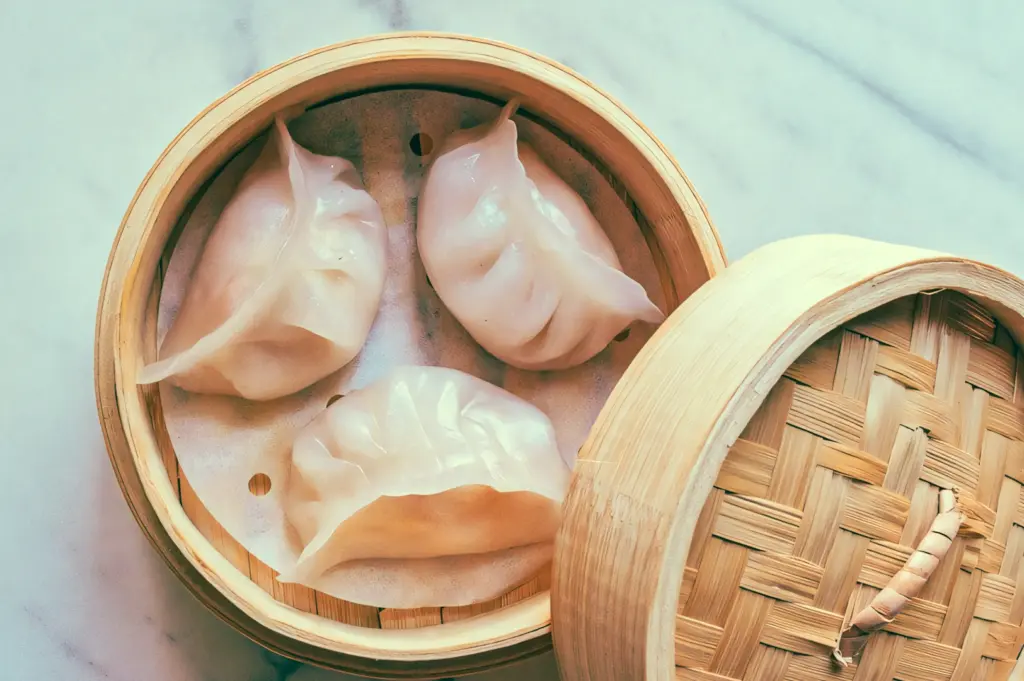
I still vividly remember the first time I completely ruined a basket of har gow. I was eight years old, sitting at a loud, clattering round table with my grandfather in Chinatown. When the bamboo lid was lifted, a cloud of steam rolled across the glass turntable, revealing three perfect, translucent dumplings.
Eager and clumsy, I stabbed at one with my wooden chopsticks. The delicate wrapper instantly tore, spilling the plump pink shrimp onto the paper liner. My grandfather just laughed, quietly lifting a perfect, intact dumpling with his own chopsticks to show me how it was done.
Back then, I just thought of it as a tasty shrimp dumpling. I had no idea about the intense dim sum craftsmanship that went into making it, or how that single bite is used by critics and chefs to judge the quality of an entire restaurant.
More Than Just a Dumpling
When you sit down for yum cha today, har gow feels like an undeniable staple. But before it became the ultimate test of a kitchen’s skill, it was simply a localized snack meant to highlight fresh seafood. If you want to truly appreciate your next morning at the teahouse, understanding har gow history changes everything about how you experience that first bite.
The Origins of Har Gow
Long before chefs stressed over the exact elasticity of wheat starch, har gow had very humble beginnings. If we trace the har gow history back, food historians point us to the outskirts of Guangzhou, specifically near the Wufeng and Wucu villages.
Centuries ago, small teahouses sat along the Pearl River. The proprietors had access to incredibly fresh, sweet shrimp pulled right from the water. They needed a way to serve this local catch to weary travelers stopping for tea. Instead of burying the seafood in heavy dough or dark sauces, they wrapped it in a thin, pale skin made from local starches. The goal was simple: let the natural pink hue and the clean, sweet flavor of the river shrimp shine through.
It was never meant to be a high-stress culinary exam. It was just a beautiful, practical way to serve the morning catch alongside a hot cup of tea.
Insider knowledge:
beautifully semi-transparent
Why Har Gow Became a Benchmark Dish
So, how did a simple river snack become the ultimate standard of dim sum craftsmanship? It comes down to the sheer technical difficulty of making one properly.
Unlike a baked pork bun or a deep-fried spring roll, har gow leaves a chef with nowhere to hide. You cannot mask old seafood with heavy spices, and you cannot cover up a badly made wrapper with a thick sauce. A proper har gow tests a chef on multiple fronts simultaneously.
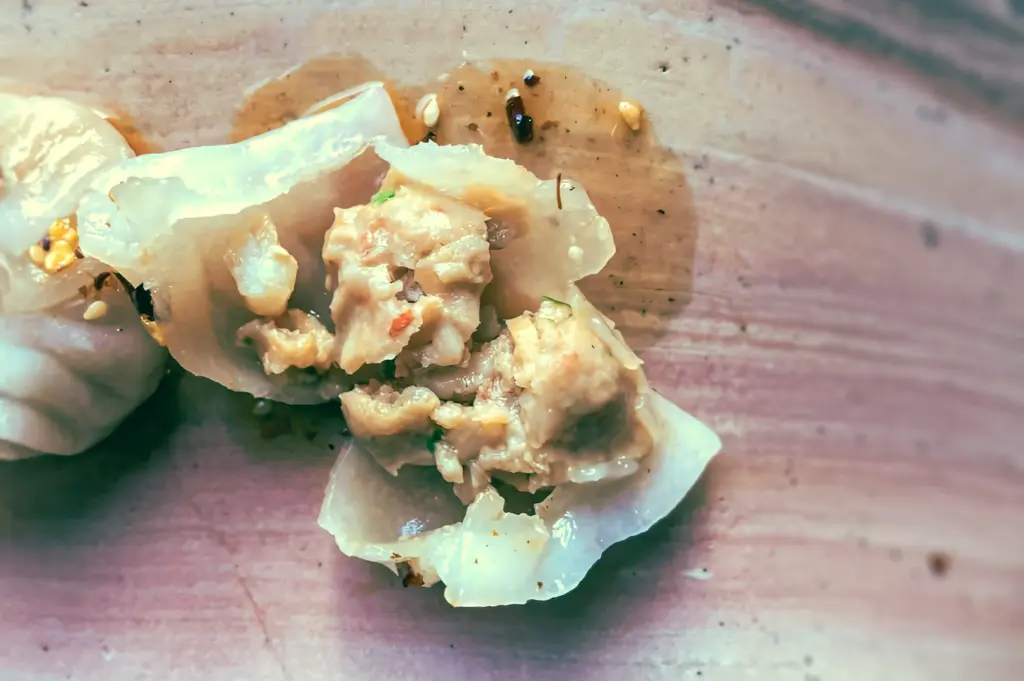
First, there is the wrapper. It must be rolled incredibly thin so that you can see the shrimp inside, yet it must remain strong enough to survive the pinch of your chopsticks. Then comes the pleating. Traditional standards demand at least seven distinct pleats along the curve of the dumpling, though ten to thirteen is the true mark of a master. Finally, there is the steaming control. Leave the basket on the heat for thirty seconds too long, and the wrapper turns to a sticky, gummy paste.
When I evaluate a new spot—whether it is a casual S$6 basket at Dim Sum Club in Wheelock Place or a refined S$12 serving at Peach Garden at The Heeren—I always order the har gow first. It tells me everything I need to know about the kitchen’s discipline.
How to Judge a Good Har Gow
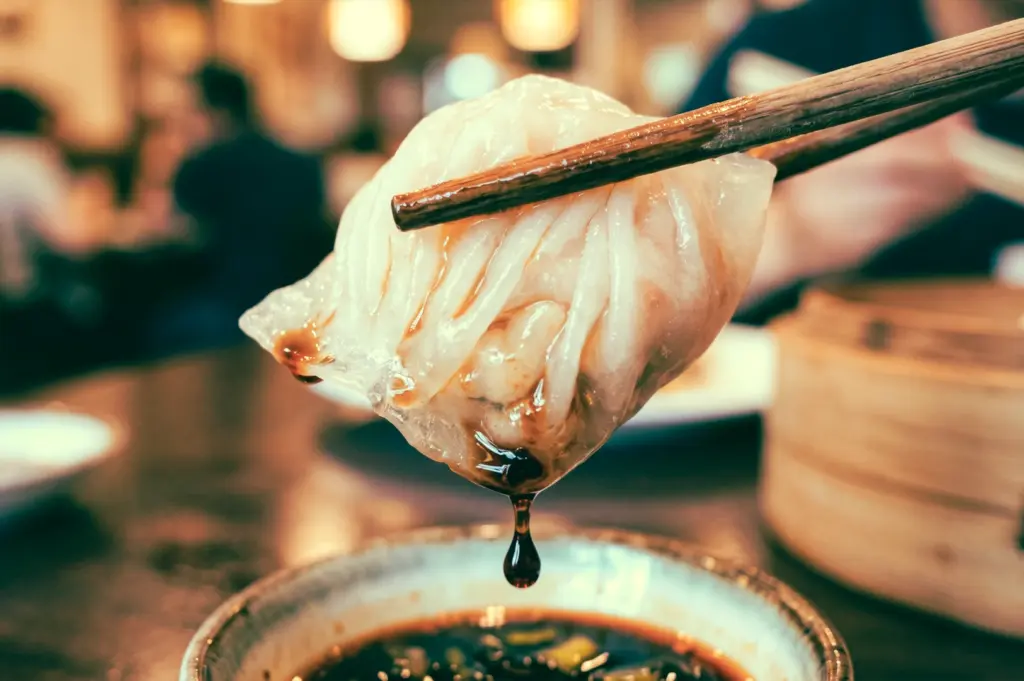
If you want to evaluate your food like a seasoned pro, you have to know what to look for. Here is my step-by-step process for approaching this iconic dish.
1. Order it in your very first round
Har gow is incredibly sensitive to temperature. As it cools, the wrapper hardens and the shrimp loses its bouncy texture. Order it early, and eat it the moment the server places the basket on your table. Expect this to be the fastest dish you consume.
2. Look closely before you dip
Pause for a second before you eat. A well-made har gow should look like a plump crescent moon. You should see the distinct pink of the shrimp beneath a pale, slightly shiny skin. The pleats should be neat and tight. If you see soggy pooling at the bottom of the paper, the kitchen has over-steamed it.
3. Lift it gently with your chopsticks
This is the moment of truth. Grip the dumpling gently around its middle. It should lift away from the bamboo paper easily. If it sticks stubbornly or the bottom tears open immediately, the wrapper ratio is wrong or the steamer was too hot.
4. Taste it completely plain
I cannot stress this enough: do not drown your first piece in chili oil or soy sauce. Take a bite. The wrapper should feel soft but slightly elastic. The shrimp filling should give you a distinct, clean snap. The flavor should be lightly savory, carrying the natural sweetness of the seafood.
5. Cleanse your palate with tea
Follow your bite with a warm sip of jasmine or pu-erh tea. The hot liquid washes away the subtle oils and prepares you for the next dish.
Modern Takes on Har Gow
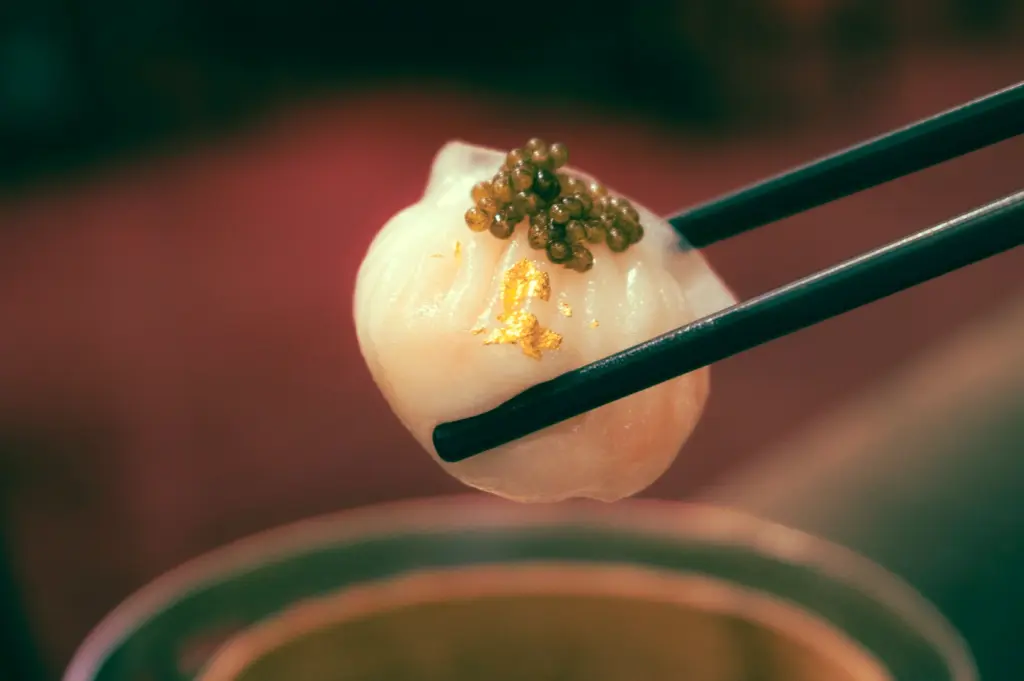
As dining culture evolves, especially in busy hubs like Somerset and Orchard Road, kitchens are constantly trying to reinvent the classics.
For a closer look at the dim sum restaurants shaping Somerset’s modern Cantonese dining scene, you can read more here.
You will often see modern takes on the menu: wrappers dyed jet black with squid ink, fillings laced with heavy truffle oil, or dumplings topped with expensive caviar.
I recently tried a truffle har gow that cost nearly S$14 for three pieces. While it was rich and earthy, the heavy truffle aroma completely overpowered the delicate sweetness of the shrimp. These modern variations can be fun for a special occasion, but I find they often distract from the foundational techniques.
When you want to know if a restaurant is truly good, always stick to the classic, unadorned version. The original recipe has survived for centuries for a reason.
Conclusion
The next time you find yourself sitting at a teahouse on a Sunday morning, surrounded by the clatter of porcelain and the hum of conversation, I want you to look a little closer at your order.
When that bamboo basket arrives, take a moment to appreciate the steam rising off the delicate, pleated wrappers. Remember the centuries of har gow history and the quiet dim sum craftsmanship required to bring that single bite to your table. Do not rush to dunk it in soy sauce.
Pick it up gently, taste the clean, sweet snap of the shrimp, and enjoy the beautiful simplicity of a dish that was never meant to be anything more than a perfect moment shared over tea.